Why Researchers Are Exploring the BPC 157 TB 500 Blend for Synergistic Studies
Modern regenerative biology research is increasingly recognizing that tissue repair is not driven by a single pathway but by the coordinated activity of multiple biological mechanisms working in concert. This understanding has driven scientific interest in research formulations that allow the study of synergistic pathways simultaneously.
The BPC 157 TB 500 blend represents exactly this kind of research tool. By combining BPC-related peptides with Thymosin beta4-related TB compounds in a single formulation, it enables researchers to investigate how these two compound classes interact to influence regenerative and tissue remodeling processes.
The Two Pathways at the Heart of the Blend
The BPC 157 TB 500 blend brings together two distinct but complementary peptide research categories. The BPC series compounds are primarily associated with mucosal protection, epithelial and tissue repair, and angiogenic pathway modulation. The TB series, derived from Thymosin beta4-related research, is associated with cell migration, cytoskeletal remodeling, and reparative signaling through actin-binding mechanisms.
When researchers study bpc-157 peptide effects in isolation, they observe specific contributions to mucosal repair and angiogenesis signaling. When they study tb-500 peptide effects in isolation, they observe contributions to cell migration and cytoskeletal organization. But tissue repair involves both processes simultaneously, which is where the combined formulation becomes scientifically interesting.
Research Questions the Blend Helps Answer
The combined formulation opens up specific research questions that neither compound alone can address effectively:
- Do BPC and TB pathway activities show synergistic effects on tissue repair markers in cell culture?
- Does the combination alter angiogenic signaling differently than each compound alone?
- How do cell migration responses differ when both pathways are activated simultaneously?
- Are there anti-inflammatory mechanisms that are uniquely activated by the combination?
- What is the time course of combined pathway activation compared to individual compound effects?
These questions represent genuinely interesting scientific territory that the bpc 157 tb 500 blend is specifically designed to help researchers explore.
The BB10 Formulation From Zlzpeptides
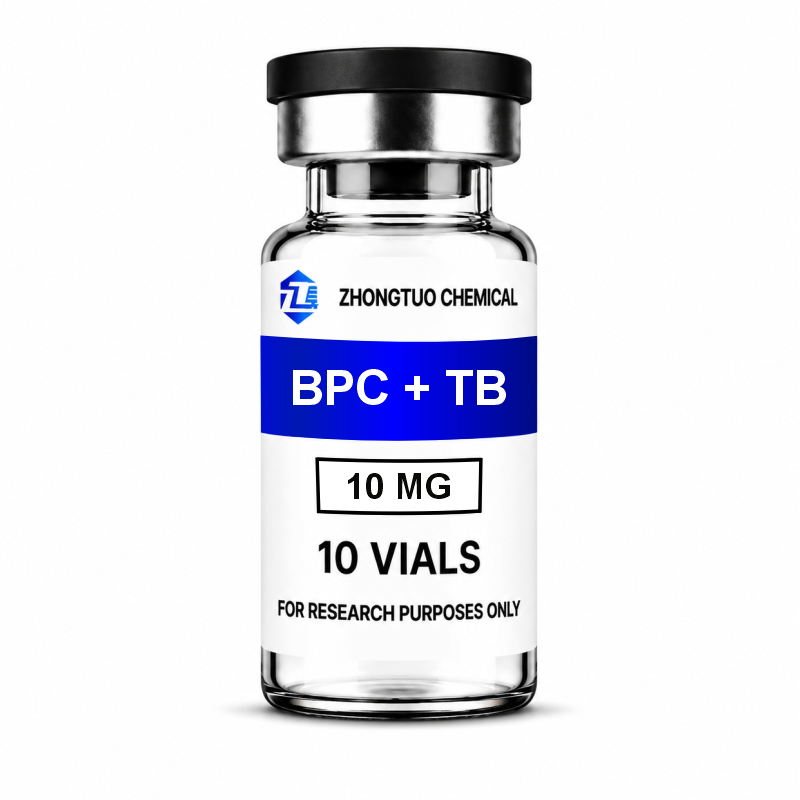
Zlzpeptides supplies their combined BPC and TB formulation under the product designation BB10. This formulation contains BPC-related peptides and TB at 10 mg per vial, supplied as 10 ml vials in a pack of 10 vials. The combined total of 10 mg per 10 vials provides sufficient material for extended experimental series investigating synergistic pathway activity.
The formulation is intended for preclinical and in vitro research examining mucosal protection, epithelial and tissue repair, angiogenic and cytoskeletal remodeling pathways from the BPC series, alongside cell migration, angiogenesis, and reparative signaling from the TB component. This is a genuinely comprehensive research package for the tissue repair biology space.
Designing Studies With the Combined Formulation
Effective research with the BPC 157 TB 500 blend requires careful experimental design to separate synergistic effects from individual compound contributions. A well-designed study using this combined formulation would typically include:
- A vehicle control group receiving matched solvent without compound
- A BPC-only group receiving BPC-related peptide at matched concentration
- A TB-only group receiving TB-related peptide at matched concentration
- A combination group receiving the blend at the same total peptide concentration
- Additional combination groups at different concentration ratios if investigating dose effects
This four-arm design allows researchers to identify effects specific to the combination that are not explained by either compound alone, providing the clearest possible evidence of synergistic activity.
Cell Migration as a Key Research Endpoint
Cell migration is one of the most informative endpoints for studying the combined effects of BPC and TB compounds. BPC peptides influence angiogenic processes that indirectly affect cell migration context, while TB compounds directly promote cell migration through actin-dependent mechanisms. The interaction between these two influences makes cell migration a particularly sensitive readout for combination studies.
Standard cell migration assays, such as the scratch wound assay or Boyden chamber migration assay, can be readily adapted to investigate BPC and TB compound effects in appropriate cell culture models.
Quality Standards for Combination Research
Any research using the combined formulation requires compounds of verified quality. Zlzpeptides produces their BB10 formulation to the same rigorous standards as their individual peptide products, with batch-specific documentation and sterile lyophilized formulation. This ensures that the research results generated reflect genuine compound biology rather than formulation artifacts.
Conclusion
The BPC 157 TB 500 blend represents a thoughtful research tool for scientists investigating the synergistic mechanisms of tissue repair and regenerative biology. By enabling simultaneous study of BPC and TB pathway activities, it opens research questions that neither compound alone can address. Quality sourcing from Zlzpeptides ensures this combined formulation performs reliably in preclinical and in vitro research settings.